Careers & Licensing
How to Become a Private Investigator in New York
Author Source EEAT Authors · David's Author Page
Author Source EEAT Authors · David's Author Page

To become a private investigator in New York, you need three years of real investigative work, a passed state exam, and a license from the Department of State that nobody under 25 can hold. That license is a business license, not a work permit. Most people do the job for years under someone else's license before they ever apply for their own.
10 sections
David Schassler has run New York Intelligence Agency since 1989, and his own road ran through New York police work and investigative journalism. Below is the road the state actually requires. It covers the experience that counts, the walk in exam downstate, the fees, and the rules that quietly end an application.
The Path in Five Lines
Almost everyone who searches the question gets the order wrong. The usual advice says to get licensed and then find work. In New York that order is backwards, and the law makes it impossible.
Under General Business Law 70, no person or company may engage in the business of private investigator, or advertise as one, without a license from the Department of State. The state's own Become a Private Investigator lists who can apply. The applicant has to be a principal in the business entity. For a firm or corporation, General Business Law 72 says at least one member must meet the experience rule and pass the exam.
So the license belongs to the person who owns and runs an agency. The people who work cases for that agency do not each need their own. General Business Law 81 sets out how they are hired instead. Before an employee starts, they sign a verified employee's statement listing their last three years of work. The license holder then takes their fingerprints and mails a set to the Secretary of State within 24 hours.
That is the real front door. You get hired by a licensed agency, or by an employer that runs its own investigations, and you build the three years there. The license comes last, when you are ready to run a business of your own. The state lists an $88.50 fingerprinting fee for that support staff and employee statement.
The experience rule is written in General Business Law 72 and explained in the Department of State's licensing FAQ. The FAQ says the three years means full time investigative work. It also allows an "equivalent position and experience," and spells out what that means.
| Your background | Time needed | Where the rule comes from |
|---|---|---|
| Sheriff, city or county police officer, or State Police, doing investigations | 3 years | GBL 72 |
| Investigator for a state, county or federal agency | 3 years | GBL 72 |
| Employee of a licensed private investigator | 3 years | GBL 72 |
| In house (proprietary) investigator for a company | 3 years, full time | DOS FAQ |
| A job whose main duty was conducting investigations | 3 years | DOS FAQ |
| Supervising and reviewing the work of 3 or more investigators | 3 years | DOS FAQ |
| New York police officer or fire marshal, any title | 20 years | GBL 72 and DOS FAQ |
| Watchman, guard or private patrol work | Does not count | GBL 72 |
Two things in that table surprise people. A police officer's three years have to be spent doing investigations, the kind the law says a private investigator does. The 20 year route is the exception, and it counts police or fire marshal service regardless of title. And years spent as a security guard count for nothing, no matter how long they were.
Keep paper on every year you plan to claim. Letters from employers with your dates, your duties and your hours will save you a long back and forth later. The state checks this part closely.
New York does not make you book the private investigator exam. According to the state's July to December 2026 exam notice, you register at the test center on the day of the exam. Seats go first come, first served. Arrive 15 minutes early, because anyone late is not let in.
Bring a current government photo ID. A driver's license, a passport and an IDNYC card are all on the accepted list. Bring the $15 fee by check, money order, Visa or MasterCard, since cash is refused. And bring two number 2 pencils, because the state does not supply them. Firearms are not allowed in the exam center.
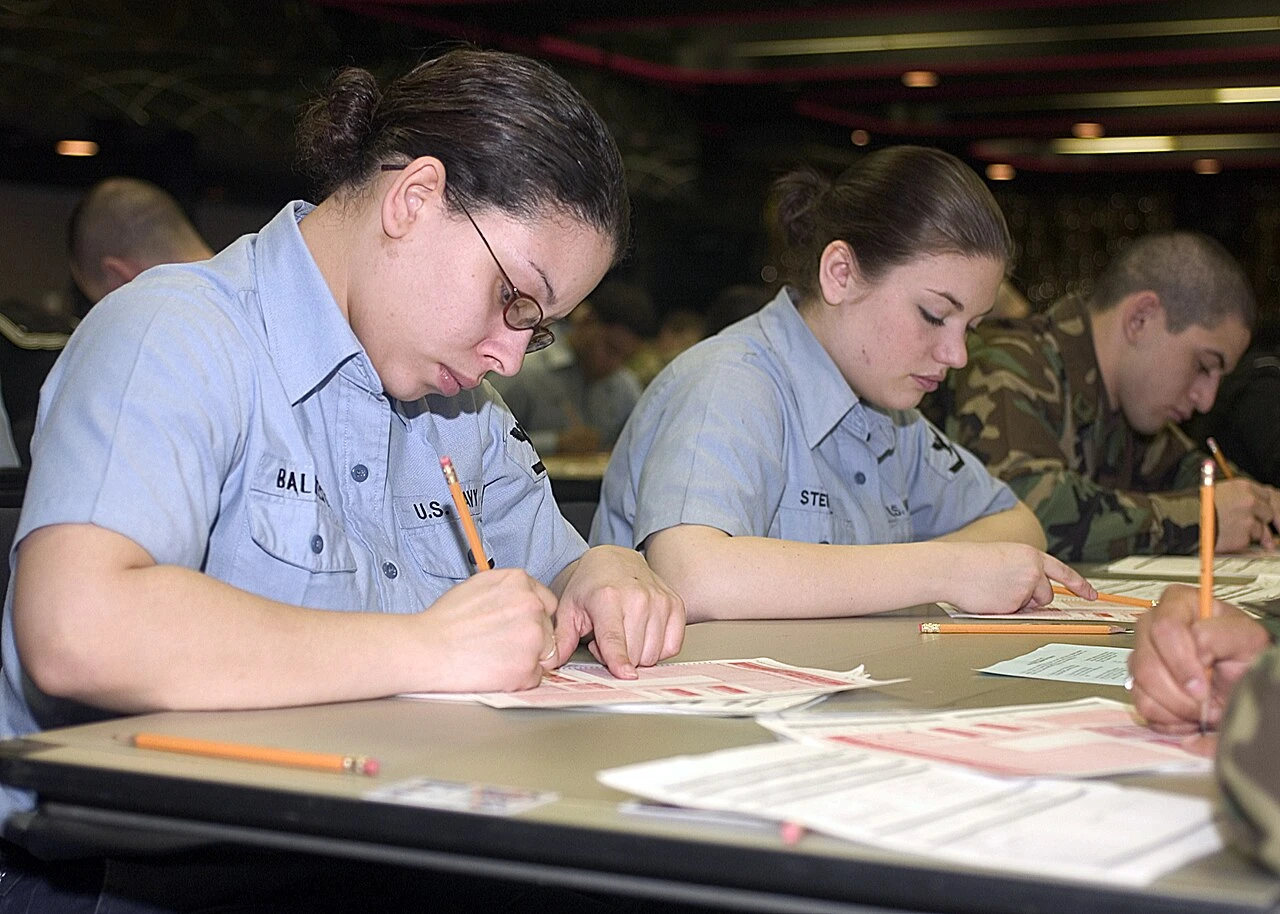
The test is multiple choice, and you get two and a half hours. The topics are license law, penal and criminal procedure law, investigative techniques, supervision, restrictions, reading written material, and report writing. It is also offered in Spanish, Haitian Creole, Italian, Korean, Russian and Chinese if you ask the proctor.
Results come by mail as pass or fail, with no score. Keep the original pass notice, because it has to go in with your application. A pass is only good for two years, so do not sit the exam until you are close to your three years.
| Downstate test site | November 2026 | December 2026 |
|---|---|---|
| Manhattan, 123 William Street, 7th Floor | Nov 10, 9 a.m. | Dec 8, 9 a.m. |
| Franklin Square, VFW Hall, 68 Lincoln Road | Nov 10, morning and afternoon | Dec 8, morning and afternoon |
| Hauppauge, Perry Duryea State Office Building | Nov 10, morning and afternoon | Dec 8, morning and afternoon |
| Pomona, Rockland County Fire Training Center | Nov 2, 1:30 p.m. | Dec 7, 1:30 p.m. |
Those dates come from the state's July to December 2026 schedule. The state says dates can change and exams can be canceled for weather, so look at the schedule again before you go.
The fees are set by the state and listed on the Become a Private Investigator page. They are nonrefundable, cash is not accepted, and a bounced check adds $20.
New York State Fees to Get a PI License
For one person licensing in their own name, the state's application and exam fees come to $415. Fingerprints, the bond and any insurance sit on top of that.
The bond is not optional. You need proof of a $10,000 surety bond, filed on the state's bond form, and General Business Law 74 sets that amount in law. A surety company quotes the yearly price of that bond, which is far less than $10,000. If you plan to employ security guards, the state also wants liability insurance of at least $100,000 per occurrence and $300,000 in total.
The costs keep coming after the license. Renewal is $400 or $500 every two years, and a late renewal adds a $100 penalty. A change of address is $10.
The state does more than check boxes. Under General Business Law 72, it pulls your criminal history from the Division of Criminal Justice Services and looks into your honesty, character and integrity. These are the hard stops written into the law and the state's FAQ.
A conviction is not always the end. The law makes exceptions for an executive pardon, a certificate of relief from disabilities, or a certificate of good conduct. The same rules apply to employees, so an agency cannot knowingly hire someone with a felony who has none of those.
If you live outside New York, you can still apply. GBL 74 asks a nonresident to file a written consent to the jurisdiction of New York courts first.
Step by Step
The full form list sits on the Department of State page, and the Private Investigator page confirms the two year term. Questions go to the Division of Licensing Services at (518) 474-4429.
The Bureau of Labor Statistics Occupational Outlook Handbook puts the national median pay for private detectives and investigators at $51,220 a year in May 2025, or $24.62 an hour. It counts about 39,500 jobs in the country and projects 5 percent growth from 2025 to 2035. It also says most people come in with several years of related experience, often from law enforcement, the military or federal intelligence.
That matches what New York asks for. The state wants proof you have already done the work, because the work is unforgiving. A lot of it is waiting, watching and writing down exactly what you saw and when.

It also has hard legal edges. A licensed investigator still cannot wiretap, trespass or pose as police, and evidence gathered that way can sink a case. We lay those limits out in are private investigators legal in New York and how private investigators legally collect evidence. Anyone serious about the career should know them cold before the exam does it for them.
A felony conviction in any state, or one of the specific crimes listed in General Business Law 74, such as unlawful entry of a building or receiving stolen property. A pardon, a certificate of relief from disabilities or a certificate of good conduct can lift that bar. Being under 25, or holding an interest in an employment agency license, also stops a license.
You cannot run a PI business or advertise as one without a Department of State license. You can do the work as an employee of a licensed investigator. Before you start, you sign an employee's statement and the license holder takes your fingerprints and files them with the state.
For most people, at least three years. That is the minimum full time investigative experience the state asks for. Police officers and fire marshals can qualify after 20 years of service instead. The exam, the results by mail and the state's review come on top of that.
The national median for private detectives and investigators was $51,220 a year in May 2025, or $24.62 an hour, according to the Bureau of Labor Statistics. Pay depends heavily on the kind of work, and agency owners earn differently from employees.
No. New York's license law asks for investigative experience and a passed exam, not a degree. The Bureau of Labor Statistics says a high school diploma is the typical entry level, and some employers prefer a bachelor's degree.
You do not book it ahead. You walk in to a state test site on an exam day with a current photo ID, the $15 fee by check, money order or card, and two number 2 pencils. Seats go first come, first served, and late arrivals are turned away.
If you landed here because you need a private investigator rather than want to become one, start with how to hire a private investigator in New York. Then call David at (646) 461-4650 any hour, or text (646) 465-2006. You can also contact us online.
Every rule, fee and date above comes from one of these pages.
Exam room photo by Photographer's Mate 2nd Class Crystal Brooks, U.S. Navy, public domain.

David J. Schassler
Emmy® Award Winning Private Investigator · NYS DOS License #11000178595 (New York) and #11000061564 (Haverstraw)
David founded New York Intelligence Agency in 1989 and has personally directed every major case since. His investigative work earned a New York Emmy® Award. More posts by David →
Somebody reads this personally. If it is urgent, call (646) 461-4650 any hour.