Records & Pre Marital
How to Find Out If Someone Is Married in New York
Author Source EEAT Authors · David's Author Page
Author Source EEAT Authors · David's Author Page
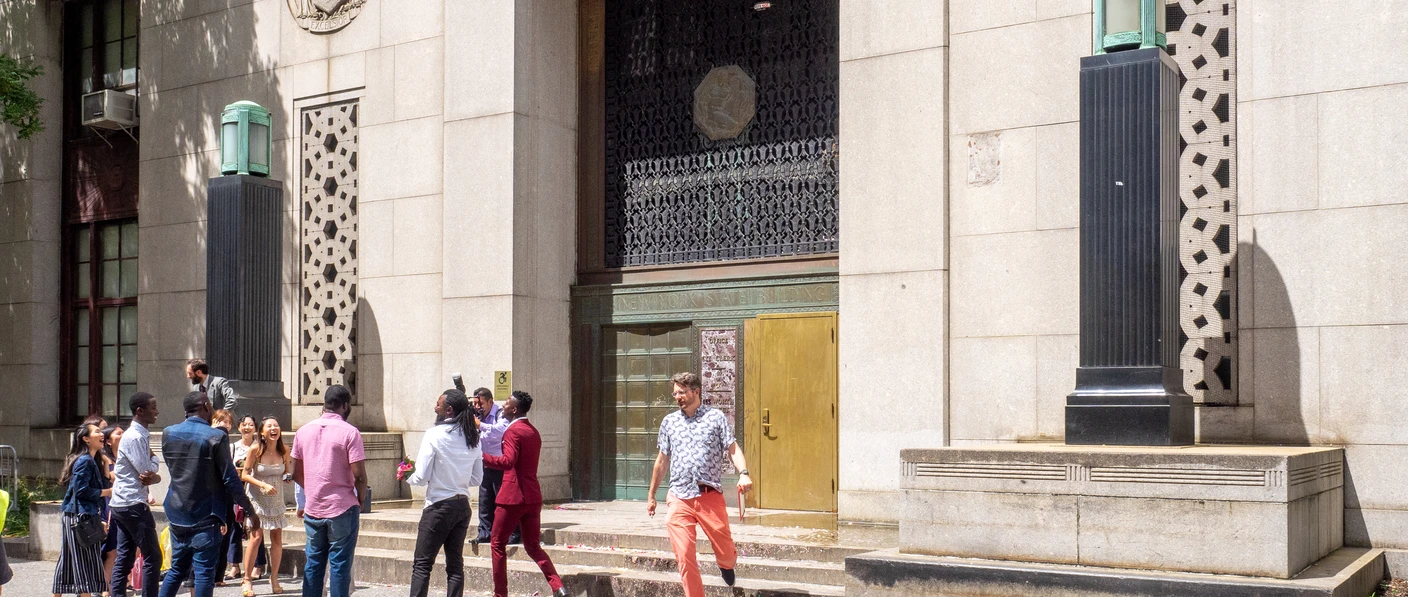
You can find out if someone is married in New York, but not with a quick search online, because the state keeps recent marriage records closed to almost everyone but the couple. The records exist. The law simply decides who gets to read them, and a curious partner is not on the list.
9 sections
Like what you read? Show me more from NYIA on Google, then pick us as a preferred source.
That surprises people, because national lookup sites rank first for this search and promise a name lookup. In New York, the real record sits with a city clerk, a town clerk or the state health department. Each one has its own rules, and none of them hands a recent record to a stranger. Below is where the records live, who can get them, what a divorce file shows, and what you can check yourself without breaking a rule.
The Facts in Six Lines
In the five boroughs, the 50 year line decides almost everything. The Office of the City Clerk says a marriage record older than 50 years is a historic record and open to the general public. A record newer than that is not.
For a record under 50 years old, the City Clerk lists six kinds of people who may ask for it. You must be one of the spouses, or hold a notarized letter from one of them. An attorney may get it as evidence in a legal case. You may also get it if both spouses have died and you bring their death certificates, or if you have a judicial or other proper purpose.
The sixth route is the one people misread. You may buy a record for another person, based on your sworn statement, but the clerk mails it to that person's address. It is never handed to you. So if you order a copy of your partner's record that way, the envelope lands in their mailbox, not yours.
Outside New York City, the New York State Department of Health holds marriage records going back to 1881. It releases copies to spouses, to people with a New York State court order, and to people who can document a judicial or other proper purpose. Its own example of a proper purpose is a letter from an agency that needs the record to process a benefit claim.
The state does release older records for family history, under tighter terms than the city. Its genealogy page says a marriage certificate must be on file for at least 50 years, and both spouses must be known to have died.
A New York marriage record is filed where the couple bought the license, not where they live now. That one fact sends most searches to the wrong office.
| Where the license was bought | Years | Office that holds it |
|---|---|---|
| Any of the five boroughs | 1950 to now | City Clerk, Manhattan office. Branch offices in Brooklyn, Queens, the Bronx and Staten Island hold 1996 to now, in person only |
| Any of the five boroughs | 1866 to 1949 | NYC Department of Records and Information Services, 31 Chambers Street, Room 103 |
| Anywhere else in New York State | 1881 to now | State Department of Health in Albany, or the town or city clerk who issued the license |
| Another state or country | Any | That place's own records office. A New York search will not show it |
Those offices and years come from the City Clerk's marriage records page and the state health department. The last row matters most. A couple who married in New Jersey or Las Vegas has no New York marriage record at all.

The fees are low. The eligibility rules are the real wall. Every price below comes from the office that charges it.
| Record | Who may get it | Fee |
|---|---|---|
| NYC marriage record, under 50 years | Spouses, their notarized agent, an attorney for a case, heirs with death certificates, a proper purpose | $15 first copy, $10 each extra |
| NYC marriage record, over 50 years | Anyone | $15 first copy, $10 each extra |
| NYC extended certificate for use abroad | Same rules as above | $35 first copy, $30 each extra |
| NYS marriage certificate, outside NYC | Spouses, a court order, a documented proper purpose | $45 online plus a vendor fee, or $30 by mail |
| NYS divorce certificate, 1963 to now | Either spouse, or a court order | $45 online plus a vendor fee, or $30 by mail |
The City Clerk also charges search fees when you do not have a license number. The first year searched costs $5, the second year $1, and each year after that 50 cents. Those same amounts are written into Domestic Relations Law 19, which lets a clerk search the marriage index and certify the result. Even if you found the license number yourself, the City Clerk still charges the $15 minimum.
The same law says those records are public records, open to inspection when needed for judicial or other proper purposes. The state's only example is an agency letter for a benefit claim, and checking on a partner is not that. So the clean legal routes for a partner are short. Ask, look at what is already public, or hire someone who knows where the public records sit.
The question is often not whether someone married, but whether the marriage really ended. New York guards divorce files even more closely than marriage records.
Domestic Relations Law 235 bars the court clerk from letting anyone but the parties and their lawyers see the papers, the testimony or the judgment, unless a court orders it. That seal lifts 100 years after the case was filed.
The same section holds the opening most guides miss. Any person may ask the county clerk for a certificate of disposition. It certifies what the court decided and what that decision did, so it can show that a divorce was granted. It shows nothing about the reasons, the money or the children.
How Long New York Keeps Each Record Closed
You have to ask the right county. The state health department's divorce records page says the decree is filed with the county clerk, usually in the county where the plaintiff lived. In Manhattan that is the New York County Clerk at 60 Centre Street, whose judgment desk handles matrimonial judgments.

None of these steps needs a password, a fake name or a lie. Each one uses records or facts that are already open.
A Six Step Self Check
Stop there. Logging into their email, reading their phone or ordering their record by pretending to be them can break the law. It also ruins anything you find if this ever reaches a court. Our guide to how investigators legally collect evidence in New York explains where that line sits.
No record found is not the same as never married. A search can come back empty for at least four plain reasons.
Why does it matter so much? Under Penal Law 255.15, a person who marries while they or the other person has a living spouse commits bigamy, a class E felony. A marriage that was never ended can also follow both of you into money and property questions later. Checking before a wedding is careful, not paranoid.
Bring in an investigator when the answer has to be right, and when the person must not know you asked. That usually means before a wedding, before you buy a home together, or when a story about a past marriage keeps changing.
Our pre marital investigation starts with a Marital History Search for $600. It looks for past marriages and divorces on file, and it can show a marriage that was never ended or a divorce that came later than you were told. Add a comprehensive search and a New York State criminal history, and all three together start at about $1,600. Your partner is never contacted.
New York Intelligence Agency has worked these cases since 1989 under New York license 11000178595 (New York) and 11000061564 (Haverstraw). If you met the person online, read how to check out someone you met online first. If you are already married and worried, start with what to do if you suspect your spouse is cheating. Or call David at (646) 461-4650 any hour, or text (646) 465-2006.
Not for recent marriages. In New York City, a marriage record becomes public once it is more than 50 years old. Outside the city, the state health department gives copies only to the spouses, to someone with a court order, or to someone with a documented proper purpose.
Not from an official New York source, for a recent marriage. The City Clerk and the state health department do not offer a free public name search for recent records. Free lookup sites can point you in a direction, but they cannot show you the closed record itself.
Ask the county clerk where the case was filed for a certificate of disposition. Domestic Relations Law 235 lets any person ask for one. It shows that a divorce was granted, but not the details. The full file stays closed to everyone but the two parties and their lawyers for 100 years.
Yes. Penal Law 255.15 makes it bigamy to marry while you or the other person has a living spouse. Bigamy is a class E felony in New York.
Not if you avoid one trap. If you order a City Clerk record for another person on a sworn statement, the clerk mails it to that person. When we run a Marital History Search, your partner is never contacted.
At the NYC Department of Records and Information Services, 31 Chambers Street, Room 103. It holds city marriage records from 1866 to 1949. Because they are more than 50 years old, they are open to the public.
Every rule, fee and year above comes from one of these pages.
Marriage Bureau and New York County Courthouse photos by Ajay Suresh, CC BY 2.0. Surrogate's Courthouse photo by Beyond My Ken, CC BY-SA 4.0. All three were resized for this page.

David J. Schassler
Emmy® Award Winning Private Investigator · NYS DOS License #11000178595 (New York) and #11000061564 (Haverstraw)
David founded New York Intelligence Agency in 1989 and has personally directed every major case since. His investigative work earned a New York Emmy® Award. More posts by David →
Somebody reads this personally. If it is urgent, call (646) 461-4650 any hour.