Privacy and the Law
A PI Cannot Legally Track a Phone or Read Texts in New York
Author Source EEAT Authors · David's Author Page
Author Source EEAT Authors · David's Author Page

No, a private investigator cannot legally track someone's phone or read their texts in New York, because both acts are crimes under state and federal law for anyone without consent or a court order. A license does not change that. What a licensed investigator can do is answer the same question by legal means, and that road is often faster.
9 sections
Like what you read? Show me more from NYIA on Google, then pick us as a preferred source.
People usually ask this late at night, after a feeling has hardened into a suspicion. A spouse turns the phone face down. A business partner seems to know about a meeting he was never told about. The pull is to get inside the phone. That road leads to a felony, a spoiled case and sometimes a scammer who now has something on you. There are better roads, and every one of them is below.
What to Know First
Every shortcut people ask about runs into at least one criminal law. New York's eavesdropping law, Penal Law 250.05, covers wiretapping, secret overhearing and the intercepting or accessing of an electronic communication. The definitions in Penal Law 250.00 make that last one any message taken without the consent of its sender or its intended receiver. A text, an email and a chat message all fit. The crime is a class E felony.
| What someone asks for | The law it breaks | Top penalty |
|---|---|---|
| Read the texts, email or chats on another adult's phone | NY Penal Law 250.05 and federal law 18 U.S.C. 2511 | Class E felony in New York, up to 5 years federal |
| Log in to their iCloud, Google or WhatsApp account | 18 U.S.C. 2701 and NY Penal Law 156.05 | Up to 1 year federal, or 5 with a criminal or commercial purpose. Class A misdemeanor in New York |
| Put a spy app on their phone | NY Penal Law 250.05 and 18 U.S.C. 2511 | Class E felony in New York, up to 5 years federal |
| "Ping" the phone or buy its location | 18 U.S.C. 1039 | Up to 10 years federal |
| Get call logs by posing as the account holder | 18 U.S.C. 1039 | Up to 10 years federal |
| Hide a GPS tracker on their car | NY Penal Law 120.45 | Counts as following under the stalking law, a class B misdemeanor |
The federal wiretap law, 18 U.S.C. 2511, lets a person record a call they are part of. That rule helps you with your own conversations. It does nothing for messages between two other people. A text sent to you is yours to read and save. A text between your spouse and someone else is not.
Federal law also protects messages stored online. 18 U.S.C. 2701 covers getting into an email or cloud account without permission, and New York adds Penal Law 156.05 for using a computer without permission. A guessed password is still a crime. Our guide on whether private investigators are legal in New York covers the full list of what a licensed PI may and may not do.
Real time phone location sits with the wireless carrier, and the carrier may not hand it out. Under 47 U.S.C. 222, a carrier needs the express prior authorization of the customer before it shares call location information. The other way out is when the law requires it, which means a court.
The police face that bar too. In Carpenter v. United States, decided June 22, 2018, the Supreme Court ruled 5 to 4 that the government must generally get a warrant before it takes cell site location records from a carrier. In that case the FBI had pulled 12,898 location points covering 127 days of one man's movements. If federal agents need a judge for that, a private investigator has no path at all.
For years a back door existed anyway. Carriers sold access to location data to middlemen called aggregators, who resold it. On April 29, 2024, the FCC fined the four largest carriers nearly $200 million for sharing that access without customer consent. T-Mobile drew more than $80 million, AT&T more than $57 million, Verizon almost $47 million and Sprint more than $12 million. The case started after reports that a Missouri sheriff had used one of these services to track people.
So when a website or a stranger online offers to ping a number for a fee, one of two things is true. Either it is a scam, or it is a crime under 18 U.S.C. 1039. That law counts location as protected phone records information. It punishes the person who buys the records, not only the one who sells them.
The ads say you can monitor any phone, and the law says no for any phone that belongs to another adult. On February 2, 2023, the New York Attorney General announced $410,000 in penalties against 16 companies, all owned by one man, that promoted spy apps. Her office said that putting such software on another adult's phone without consent violates numerous state and federal laws. The companies also had to change the apps so the phone's owner gets an alert.
The FTC went further with one seller. On September 1, 2021, it banned SpyFone and its chief executive from the surveillance business. The app could secretly expose photos, texts, web history and GPS location. The order required the company to tell owners their phones may have been watched.
Notice the pattern. Both orders made the seller warn the people being watched. A spy app is a bet that the other person never finds out, and regulators keep making that bet worse. If they do find out, the person who installed it is the one facing charges, and anything read through the app is a gift to the other side's lawyer.
The law turns on consent, so who owns the phone and the account changes the answer.
The NYPD logged 12 eavesdropping complaints in 2025, by our count of the city's public complaint records. We tallied every record coded as eavesdropping in NYPD Complaint Data Historic for 2021 through 2025, and in the current year file for January through September 2026.
Eavesdropping Complaints Reported to the NYPD
That is 36 complaints across five years. Brooklyn and Manhattan had 10 each, Queens 8, the Bronx 7 and Staten Island 1. For scale, the same 2025 file holds 102,668 harassment complaints.
Read that small number with care. A complaint exists only when someone finds the spying and reports it. Spy apps are built to stay hidden, and texts read on a borrowed phone leave little trace. The count shows how often eavesdropping is caught and reported, not how often it happens.
It is climbing, though. Complaints went from 3 in 2021 to 12 in 2025, and the first nine months of 2026 already brought 10. In the same 2026 file, another 29 complaints fell under the two computer tampering and unauthorized use codes.
Most people do not need the texts, they need what the texts would prove. A text says "running late." A photo shows where the person actually went and who met them there. That photo is legal, and it holds up.
| What you want to know | The legal route | What it costs at NYIA |
|---|---|---|
| Where is this person really going? | Surveillance in public places, with timed photos and a written report | $240 an hour for one investigator, $280 for two, 5 hour minimum, $100 vehicle charge a day |
| Who are they meeting? | Surveillance, then a records search to identify the other person | Surveillance rates, plus a flat $400 background check |
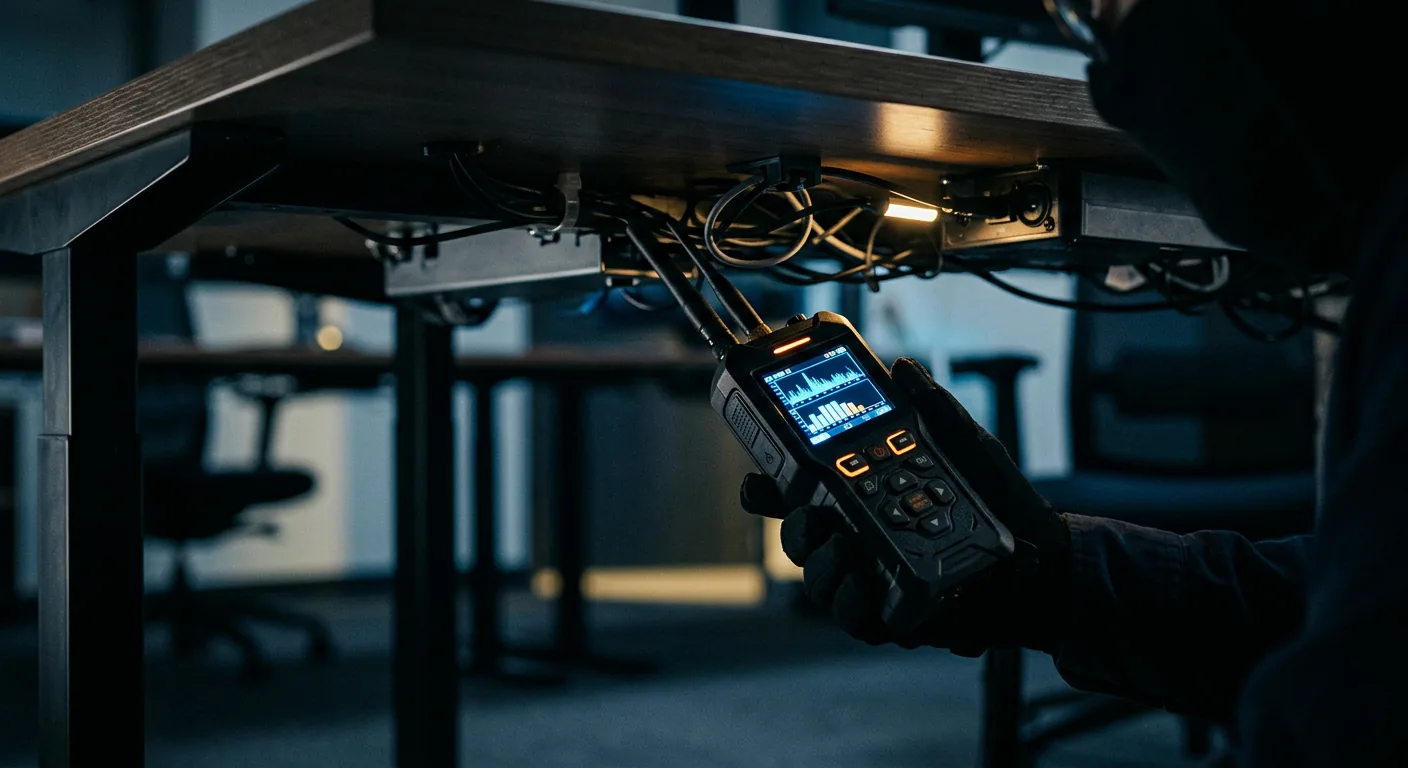
| Is my own phone, home or car being watched? | A spyware check of your own device and a bug and tracker sweep | Flat $1,400 sweep for a home, office or car |
| I need call records for a divorce or a lawsuit | Your lawyer asks for them through the court, since carriers release records when the law requires it | Set by your case, through your attorney |
The rates come from our private investigator cost guide, the sweep price from our TSCM and bug sweep service, and the background check from our background check page. If the worry is a spouse, our matrimonial investigations page explains how that work runs, and many cases can start the same day.
Any offer to get into another person's phone is a reason to walk away. Watch for these lines.
Paying someone for illegal access also hands them something to hold over you. You cannot report a con artist without telling the police what you paid for. Before you pay any New York investigator, check the license with the state, as our page on how to check us explains.
When you are ready to talk it through, call David at (646) 461-4650 any hour, or text (646) 465-2006. The first consultation is free and confidential.
Not legally, without your consent. Phone location comes from your carrier, which needs your permission or a court order to release it. Secretly tracking where you go counts as following under New York's stalking law.
No. Taking a message without the consent of its sender or intended receiver is eavesdropping, a class E felony in New York, and a federal crime too. A license gives no exception.
Only if you hand it over and agree. With the owner's permission, a phone can be checked for spyware or lost data. Without it, getting in is a crime.
Yes, but they generally need a warrant. The Supreme Court ruled in Carpenter v. United States in 2018 that police must generally get a warrant for cell site location records, with room for emergencies.
Through public records and commercial record databases, not carrier records. A search can often tie a number to a name. A licensed investigator will also ask why you need it before handing over anything.
Yes, when they were not sent to you and no one on the message agreed. Penal Law 250.05 makes it eavesdropping. Texts sent to you are yours to read and keep.
Every law, ruling and figure above comes from one of these pages.

David J. Schassler
Emmy® Award Winning Private Investigator · NYS DOS License #11000178595 (New York) and #11000061564 (Haverstraw)
David founded New York Intelligence Agency in 1989 and has personally directed every major case since. His investigative work earned a New York Emmy® Award. More posts by David →
Somebody reads this personally. If it is urgent, call (646) 461-4650 any hour.